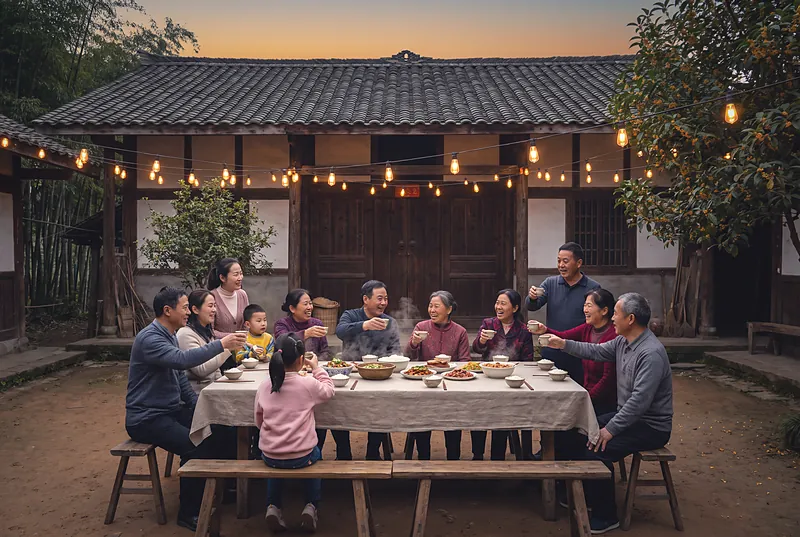

At a formal Chinese banquet, seating is rarely an afterthought. The arrangement can communicate who is hosting, who is being honoured and how seniority is being recognised. For a visitor, the safest approach is simple: do not assume that an empty chair is yours. Wait for the host to guide you.
Traditional Chinese banquet etiquette places considerable emphasis on order, status and the proper relationship between host and guest. University guidance on Chinese banquet seating describes conventions including the host facing the entrance, the principal guest occupying a position of honour and senior guests being placed closer to the principal seats. The precise arrangement varies with the room, table and occasion.12
"In the practice of ritual, harmony is the prize." (礼之用,和为贵)
— The Analects, 1.124
The passage is useful here because ritual is not merely decoration. In the classical tradition, it is a way of giving social situations a recognisable order. A banquet seat therefore says something before anyone has spoken.
The Seat of Honour
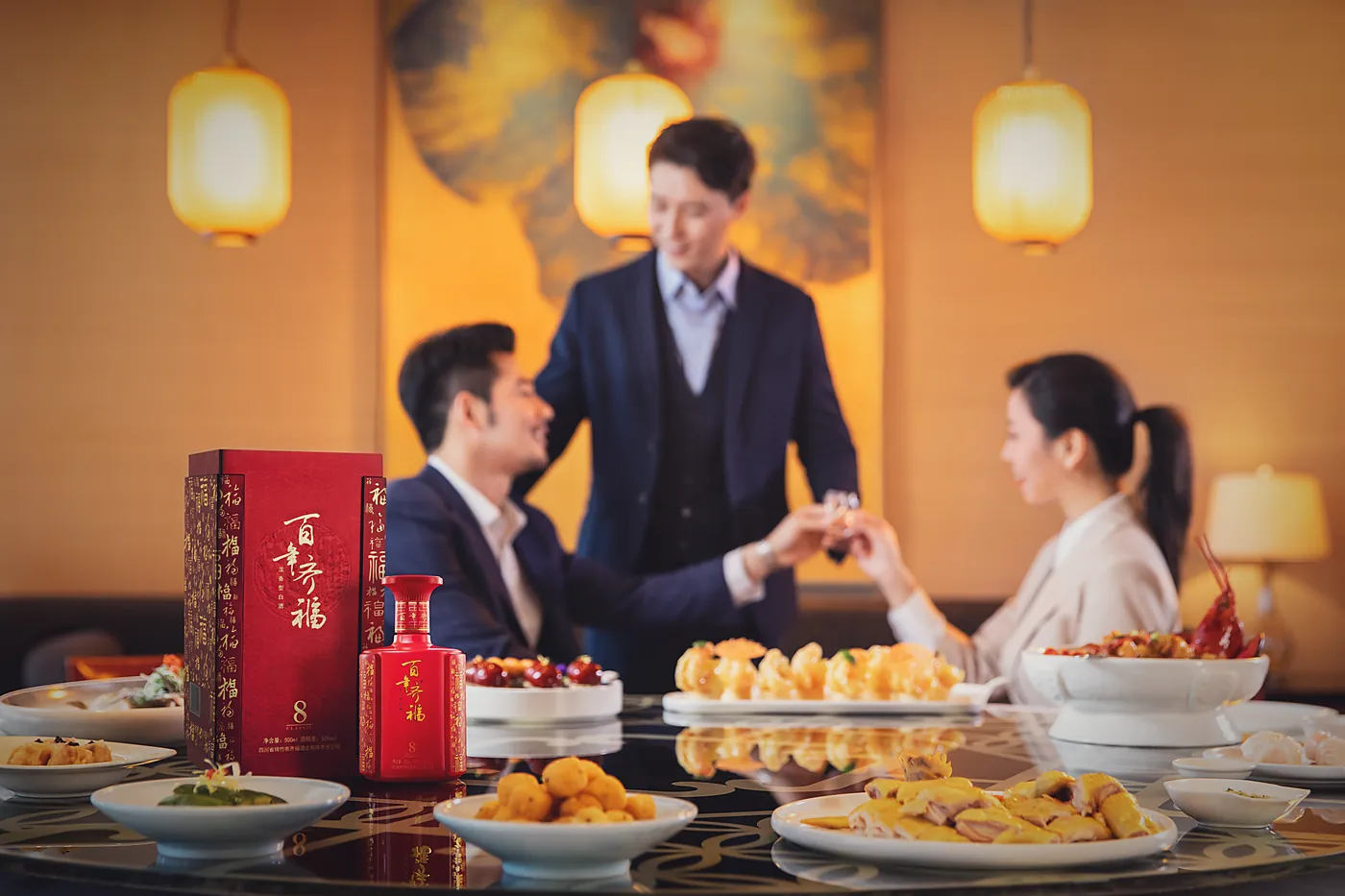
In many formal settings, the principal seat is positioned facing the main entrance or in the most prominent position in the room. Other conventions can place importance on the best view, the central position or proximity to the host. A university guide on Chinese dining etiquette notes that the host traditionally faces the entrance and the principal guest sits to the host's right.1
But this is precisely where visitors should resist turning etiquette into a rigid diagram. Modern restaurants differ. Tables differ. Regional practice differs. The host may also deliberately relax traditional arrangements. The most elegant response is to observe first and follow the host's lead.
Who Sits Near Whom
At a round table, senior guests are generally placed close to the host and principal guest, while more junior members may sit further away. In a large banquet, seating may also reflect the status of different tables. Chinese university guidance describes a broader principle of placing higher-status guests nearer the principal table and arranging guests of similar standing together.12
The arrangement has a practical purpose as well as a symbolic one. Senior guests can be attended to easily, introductions can be made in the proper order and conversation can move naturally around the table. A junior member seated near the door may be expected to help with service or coordination. It is not necessarily a slight; it may simply be part of the host's organisation of the evening.
Before You Sit
Wait to be invited. If a member of the host's team guides you towards a seat, follow rather than negotiate. If you are unsure, ask quietly. The Canadian Trade Commissioner Service likewise advises visitors to follow the host's cues for dining, including when to begin eating and how the banquet is conducted.3
Do not begin eating or drinking before the host has indicated that the meal has started. At formal banquets, the principal guest may be invited to begin with a dish or a toast. These small signals help establish the rhythm of the table.
If You Are Hosting
The host should decide the seating before guests arrive. Identify the principal guest, place senior members of the hosting party where they can support the conversation and make sure the arrangement is easy to understand. Name cards can be useful for larger occasions.
When receiving a guest, guide them towards the seat rather than pointing from across the room. The gesture is small, but it makes the welcome personal. In a formal setting, the host is responsible for removing uncertainty before the guests have to ask.
If You Are the Guest
Do not take the most prominent seat simply because it is empty. Allow the host to offer it. If you are the principal guest and are directed to the seat of honour, accept with thanks. If you are unsure, ask the host's representative rather than moving someone else or choosing a place yourself.
It is also wise to watch the first few minutes of the meal. Who is served first? Who makes the opening toast? Who does the host address? These details will tell you more about the structure of the evening than any etiquette checklist.
Why the Seating Matters
Seating sets the pattern for what follows. Toasts may begin with the host and principal guest before moving to other members of the table. Conversation can follow the same order of seniority. When the arrangement is clear, people can concentrate on the company, the food and the occasion rather than wondering who should speak or act next.
The important point is not to memorise a single seating chart. It is to understand the principle behind the chart: respect is made visible through order. Modern Chinese banquets can be relaxed, cosmopolitan and informal, but the ability to recognise the traditional pattern remains useful when the occasion is formal.
A seat is never only a chair at such a table. It is part of the welcome, part of the hierarchy and part of the conversation. Knowing when to sit, and where to sit, is one of the quietest ways to show that you are paying attention.
Editorial note: Traditional seating conventions are presented as conventions rather than universal rules. The article deliberately directs visitors to observe the host because contemporary practice varies by region, venue, generation and occasion.