
At a Chinese business meal, two apparently ordinary questions can carry unusual social weight: who pours the drinks, and who pays the bill? Neither is merely administrative. Both sit within a wider language of hospitality in which the host is expected to look after guests and the guest is expected to recognise that generosity.
In formal dining settings, the host or members of the hosting party commonly take responsibility for serving drinks. The Canadian Trade Commissioner Service advises that visitors should follow the host's lead at the banquet and confirms that, in common business practice, the host pays the bill.1
Zigong asked, "Is there a single word which can be a guide to conduct throughout one's life?" The Master said, "It is perhaps the word shu. Do not impose on others what you yourself do not desire."
— The Analects, 15.244
The passage is a statement about reciprocity rather than dining etiquette, but it offers a useful lens for understanding hospitality. The table works through small acts of giving and receiving, each one carrying an expectation of consideration in return.
Who Pours
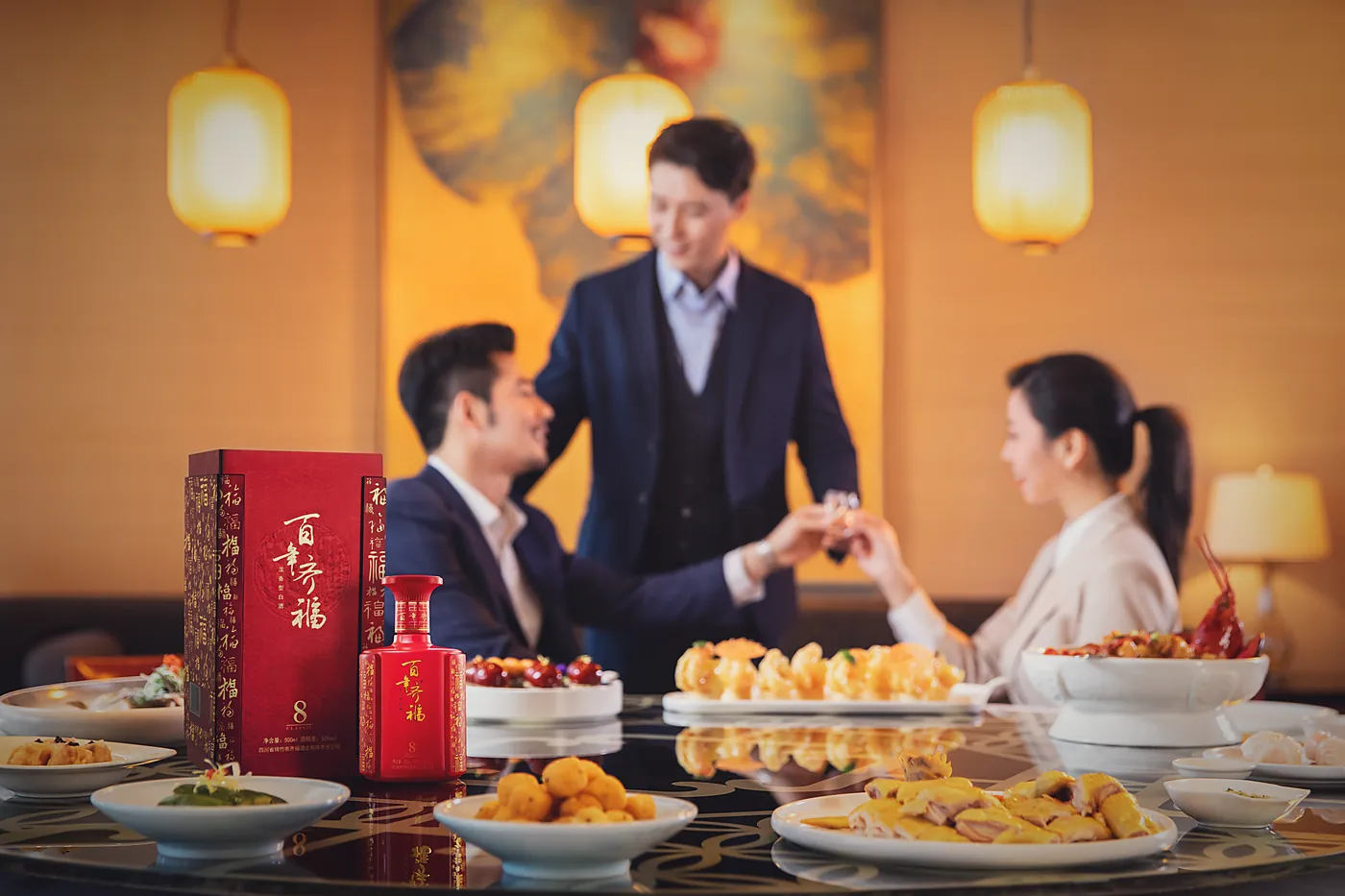
At a formal table, the host or a member of the host's team will often pour for guests. Senior guests may be served first, and junior members may help to keep the table attended. The important point is not to turn this into a mechanical ranking system. It is an expression of care: the person hosting is watching the table and making sure guests are included.
When someone pours for you, acknowledge the gesture. Lift the cup slightly, receive it with both hands where appropriate, or simply thank the person. In some Chinese tea-drinking traditions, lightly tapping two fingers on the table has become a recognised gesture of thanks. Sources on Chinese dining etiquette note that the custom is associated particularly with tea service and is not equally expected everywhere.2
Pouring For Others

Guests should not treat service as something that happens only in one direction. If the occasion is formal, looking after the people beside you can be an elegant gesture of participation. Pour for another person before yourself when appropriate, use care and avoid spilling. These actions are small, but they show that you understand the table as a shared space.
There is no virtue in constantly topping up a glass against someone's wishes. Good hospitality requires attention as well as generosity. If a guest has had enough, the considerate response is to accept that answer.
A Cup Is Not An Obligation
Drinking customs vary considerably. Some banquets involve frequent toasts; others are much lighter. The official Canadian guidance notes that drinking expectations can vary by region and advises visitors to take their cue from the host and local contact.1
For international guests, this distinction matters. Participation in a toast need not mean drinking to excess. A visitor can acknowledge the gesture, explain a personal limit politely and choose a non-alcoholic alternative where necessary. The social purpose of the toast is participation in the shared moment, not a competition in consumption.
Who Pays
The conventional rule in a hosted Chinese business meal is straightforward: the host pays. The Canadian Trade Commissioner Service explicitly advises that the host should settle the bill discreetly rather than displaying money in front of guests.1 This is also consistent with other business-etiquette guidance, which describes the inviting company or host as the normal payer in a formal business meal.3
The familiar attempt to reach for the bill can therefore be misunderstood if handled too aggressively. A guest may offer to contribute as a gesture of courtesy, but if the host has clearly taken responsibility, prolonged resistance can create an awkward contest. A better form of reciprocity is to host the next meal.
Return The Hospitality
Reciprocity is the graceful answer to generosity. If a Chinese counterpart has hosted you, consider returning the invitation later. The return meal does not have to imitate the original in extravagance. What matters is that the gesture is deliberate and appropriate to the relationship.
This is particularly useful in business. Hospitality is not the same thing as a contract, and a dinner should never be treated as a shortcut around commercial rules or professional judgement. But repeated acts of hospitality can help establish familiarity and goodwill between people who expect to work together again.
The Quiet Work of the Host
The most accomplished host is rarely the loudest person at the table. They notice who has been served, whether a guest is comfortable, whether a toast has included everyone and when the bill should be settled. They make the evening feel effortless because the work has been done quietly in advance.
Pouring and paying are small acts. Together, they express a larger principle of Chinese banquet culture: the host gives, the guest receives with thanks, and the relationship continues through reciprocity. The bill ends the meal. The hospitality is meant to outlast it.
Editorial note: This article treats pouring, drinking and payment as common formal conventions, not universal rules. Modern practice varies, and guests should follow the host, venue and context rather than attempting to enforce a fixed etiquette script.