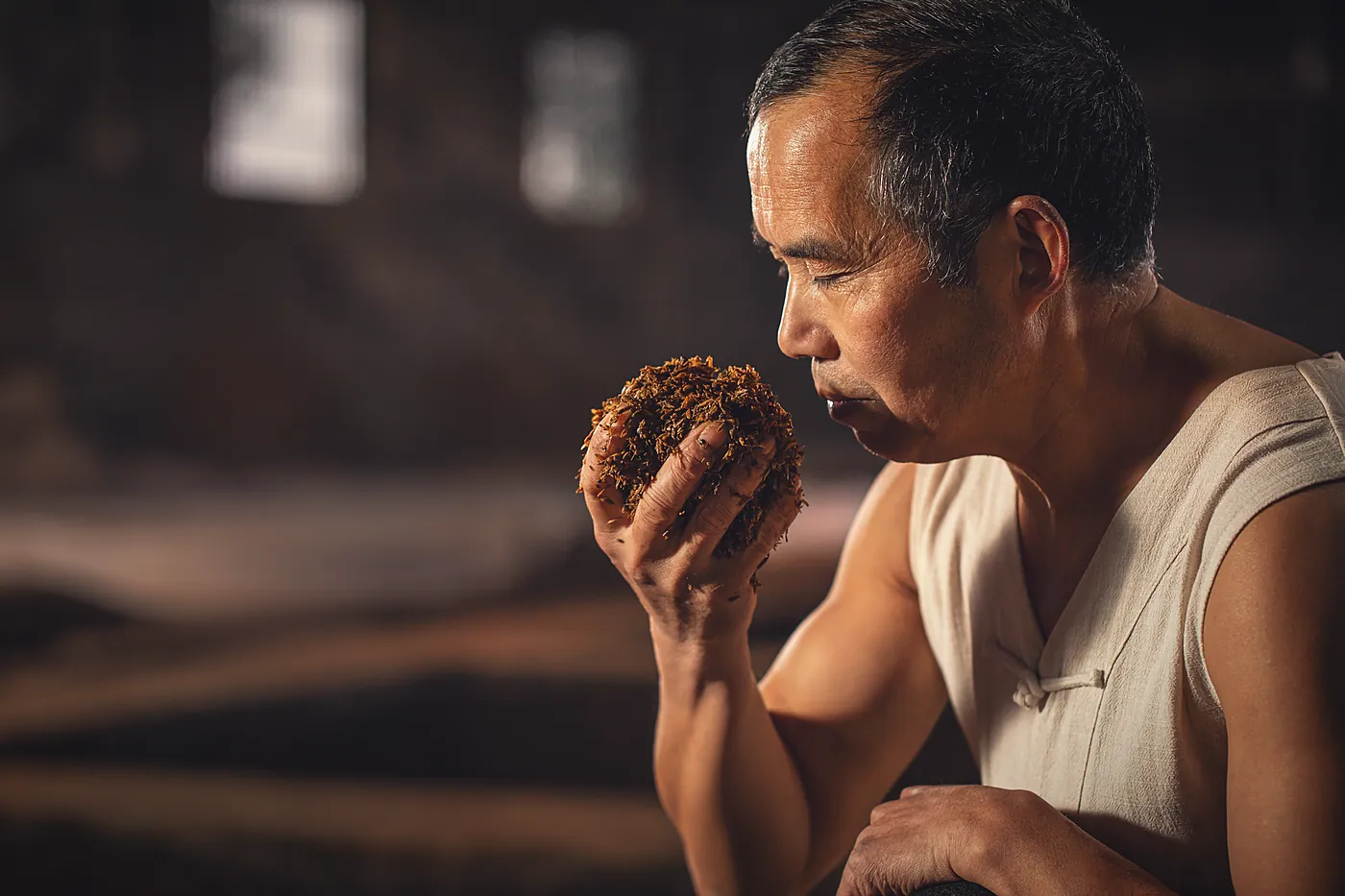
A distiller smelling fermented grain

Taste & Compare

Know what’s
in your glass.

How is baijiu different from whisky or vodka? What sets strong aroma apart from sauce and light aroma? And what does “pure grain, solid-state” really mean? This page explains.

Comparison 1

Baijiu among the world’s spirits

Baijiu is the only major spirit built on solid-state fermentation and solid-state distillation. A different method makes a completely different flavour.

Compare with:
AspectQifu · Nongxiang baijiuScotch whiskyVodkaCognac
Raw materialFive grains: sorghum, wheat, rice, glutinous rice, cornMalted barleyGrain, potato and othersGrapes (white wine)
StarterDaqu: wild yeasts, moulds and bacteria working togetherMalt enzymes + cultured yeastEnzymes or malt + cultured yeastWine yeast
FermentationSolid-state: damp grain sealed in mud pits for about two monthsLiquid wash, about 2–3 daysLiquid, a few daysLiquid wine fermentation, weeks
DistillationSteam passes through the solid grain in a zeng still; only the heart is keptCopper pot stills, usually twiceColumn still to near-neutral strengthCharentais copper stills, twice
AgeingClay jars that breathe; no woodOak casks, at least 3 years by lawUsually unagedOak casks, at least 2 years
Typical strength38–60% vol (Bainian Qifu · 8: 52%)≥40% vol≥37.5% vol (EU)≥40% vol
Where flavour comes fromEsters from qu, pit-mud microbes and long fermentationMalt, still shape and oakDesigned to be neutralGrapes and oak

Other columns describe common practice and EU/UK legal minimums for each category; individual products vary.

Research

The Healthy bioactive trace compounds
in a cup of Qifu

Qifu’s pure-grain, solid-state fermentation naturally creates hundreds of trace compounds. Several have drawn the attention of food and pharmaceutical researchers — each of the compounds below was detected in Qifu laboratory testing, shown with what published studies found.

01Qifu testedAnimal & cell studies

Tetramethylpyrazine (TMP)

Detected in Qifu laboratory testing

TMP research centres on cardiovascular function. In animal-tissue and cell experiments it lessened oxidative damage to the vascular endothelium and improved impaired vasodilation; in diabetic rats it curbed platelet over-activation and adhesion to the vessel wall.

eCAM 2014 (vascular function)
Phytomedicine 2021, 96:153860 (platelets)

02Qifu testedCell study

AKRA tetrapeptide

Detected in Qifu laboratory testing

In cell experiments, AKRA reduced the build-up of excess reactive oxygen species, helped maintain glutathione and antioxidant-enzyme activity and lessened lipid oxidation, suggesting it helps cells cope with oxidative stress. Different peptides act differently; total peptide content alone says little.

J. Agric. Food Chem. 2017, 65(48):10495

03Qifu testedCell studies

4-Methylguaiacol · 4-ethylguaiacol

Detected in Qifu laboratory testing · flavour phenols with smoky, clove-like notes

Cell studies found both phenols strengthen cells’ own antioxidant defences and lessen induced oxidative damage; 4-ethylguaiacol also suppressed inflammatory signalling and cytokine production in an inflammatory cell model.

RSC Advances 2018 (antioxidant)
J. Agric. Food Chem. 2019, 67(4):1230 (inflammation)

These are compound-level laboratory studies (cell or animal experiments) using concentrations higher than those found naturally in baijiu. Please drink in moderation.

Comparison 2

Strong, sauce or light:
what’s the difference?

Baijiu is classified by aroma. The three main styles differ from the fermentation vessel onward. Qifu is traditional strong aroma — China’s most popular style.

Qifu

Strong aromaNongxiang

Region
Sichuan basin — home of Mianzhu
Vessel
Yellow-clay mud pits
Fermentation
About 45–90 days (Qifu: about 60)
Key aroma
Ethyl hexanoate
Taste
Rich pit aroma, ripe pineapple-like fruit, soft sweetness, long clean finish
  • Aroma
  • Sweetness
  • Body
  • Finish

Sauce aromaJiangxiang

Region
Chishui River, Guizhou
Vessel
Stone-walled pits
Fermentation
One year per cycle (the “12987” method)
Key aroma
Complex; roasted, soy-like notes
Taste
Savoury, roasted and layered; the empty cup keeps its scent
  • Aroma
  • Sweetness
  • Body
  • Finish

Light aromaQingxiang

Region
Shanxi and northern China
Vessel
Ceramic jars buried in the ground
Fermentation
About 28 days
Key aroma
Ethyl acetate
Taste
Clean, crisp and floral
  • Aroma
  • Sweetness
  • Body
  • Finish

Flavour dots are a general style guide, not lab measurements; products within one style vary widely.

Comparison 3

Qifu and China’s famous names

China’s best-known baijiu differ in style, region and grain. Set side by side, they show where Qifu stands: a Sichuan five-grain strong aroma from the famous Mianzhu region.

Qifu by the numbers

Bainian Qifu · 8

5grains
Sorghum · wheat · rice · glutinous rice · corn
~60days
Solid-state in yellow-mud pits
52%
ABV — the classic strong-aroma strength
500ml
Standard bottle in a red gift box
1978
Family-run ever since
779
Mianzhu’s Tang tribute heritage
FeatureQifuMoutaiWuliangyeLuzhou LaojiaoJiannanchunFenjiu
Aroma styleStrongSauceStrongStrongStrongLight
Grains used515151
Mud-pit fermentation✓—✓✓✓—
Sichuan heartland✓—✓✓✓—
Mianzhu region✓———✓—
Flagship strength52%53%52%52%52%53%
Family-run, direct from the distillery✓—————

One bottle of Qifu brings together the five-grain recipe, mud-pit strong aroma, the classic 52% strength and the famous Mianzhu region — sent by one family, straight from the distillery to your table.

Details: style, region, grain and pits
BaijiuStyleRegion GrainPits & fermentationCharacter
Moutai Sauce Renhuai, Guizhou — Chishui RiverSorghum (wheat qu)Stone-walled pits; one-year cycle, the “12987” methodSavoury, roasted; the empty cup keeps its scent
Wuliangye Strong Yibin, SichuanFive grains: sorghum, rice, glutinous rice, wheat, cornMud-pit solid-state fermentationMulti-grain, rounded and harmonious
Luzhou Laojiao Strong Luzhou, SichuanSingle grain: sorghumMud pits, some in use since 1573Deep pit aroma, pure single-grain
Jiannanchun Strong Mianzhu, SichuanFive grainsLow-temperature mud-pit fermentation; pits from the Kangxi eraRich aroma, full and soft
Fenjiu Light Xinghuacun, Fenyang, ShanxiSorghumCeramic jars buried in the groundClean, crisp and floral
Qifu · Bainian Qifu Strong Xiaode, Mianzhu, SichuanFive grains: sorghum, wheat, rice, glutinous rice, cornYellow-clay pits under a red-grain cap, ~60 days solid-stateFull pit aroma, soft sweetness, long clean finish
01

The same ground

We share the Mianzhu region with Jiannanchun: the same Longmen spring water, yellow clay and humid, misty climate.

02

The same five-grain idea

Like Wuliangye and Jiannanchun we brew from five grains — the Sichuan multi-grain strong-aroma school, layered and balanced.

03

Different in scale and distance

Qifu has been run by one family since 1978 and ships direct from the distillery — a famous-region baijiu that is still new to most overseas markets.

Brand details come from public sources and are given only to explain differences in style, region and grain. Trademarks belong to their owners; Qifu is not affiliated with these brands.

Comparison 4

What “pure grain, solid-state” means

China’s baijiu standards, in force since 2022, sort baijiu into three methods — and say that spirit flavoured with additives may no longer be called baijiu at all.

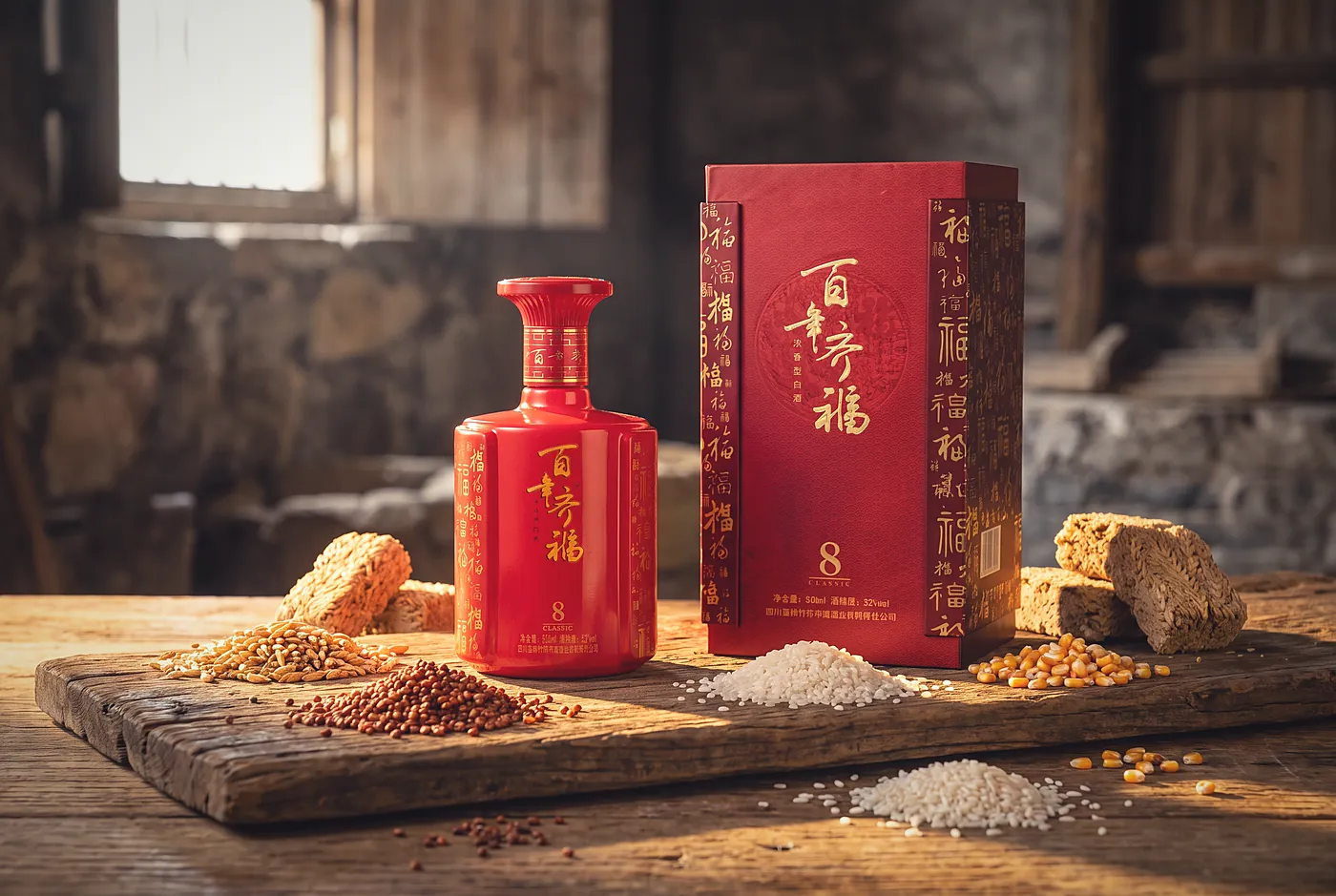
Sorghum, wheat, rice, glutinous rice, corn and Daqu
Five grains, water and qu: everything that goes into pure-grain, solid-state baijiu.

Solid-state baijiu

Grain and qu, fermented and distilled as a solid. The strong-aroma standard (GB/T 10781.1-2021) forbids adding edible alcohol, or any colour, aroma or flavour that did not come from its own fermentation.

The way Qifu makes baijiu

Solid-liquid baijiu

A blend of some solid-state baijiu with liquid-method spirit made from grain-based edible alcohol.

Liquid-method baijiu

Grain fermented as a liquid, or spirit built on grain-based edible alcohol.

“Flavoured baijiu” (a blended drink)

Made with added flavourings to imitate baijiu. Under the current standards it is a blended drink, not baijiu.

How to check a bottle

Turn to the back label and check two things: the product type should read solid-state baijiu (固态法白酒), and the standard should be the solid-state standard for that style (for strong aroma, GB/T 10781.1). The ingredients should be only water, grain and qu.

Comparison 5

The standard is the floor.
We go further.

Three national standards govern baijiu: what may be called baijiu, the quality grades for strong aroma, and food-safety limits. Qifu takes the strictest path through them — and keeps doing more where the standards are silent.

Five things Qifu does beyond the standard

Grain

StandardGrain — a single grain is allowedQifu5 grains

Fermentation

StandardNo minimum setQifu~60 days

Pits

StandardMud-pit fermentationQifuYellow clay + red-grain cap

Ageing

StandardNot specifiedQifuClay-jar ageing

Cut & blend

StandardNot specifiedQifuHeart cut · master blender

Key figures: China and the world

Measure China (GB) EU 2019/787 Bainian Qifu · 8
StrengthHigh-strength strong aroma: 40–68% volSpirit drinks ≥ 15% vol; vodka ≥ 37.5%; whisky ≥ 40%52%
Total acids & esters (flavour)Premium ≥ 35.0 mmol/L; first grade ≥ 30.0No equivalentTest report on request
Methanol (per 100% alcohol)Grain spirits ≤ 0.6 g/LSet per categoryComplies with GB 2757
Cyanide (as HCN)≤ 8.0 mg/LUnder EU food-safety lawComplies with GB 2757
AdditivesSolid-state: no edible alcohol, no outside colour, aroma or flavourWhisky: only caramel colouring allowed, no sweetening✓ Water, grain and qu only
AgeingNot specified for strong aromaWhisky: ≥ 3 years in woodClay jars

Sources: GB/T 17204-2021, GB/T 10781.1-2021 (in force 1 April 2022), GB 2757-2012 (food safety: distilled spirits), Regulation (EU) 2019/787.

How to taste

Look, nose, sip, linger

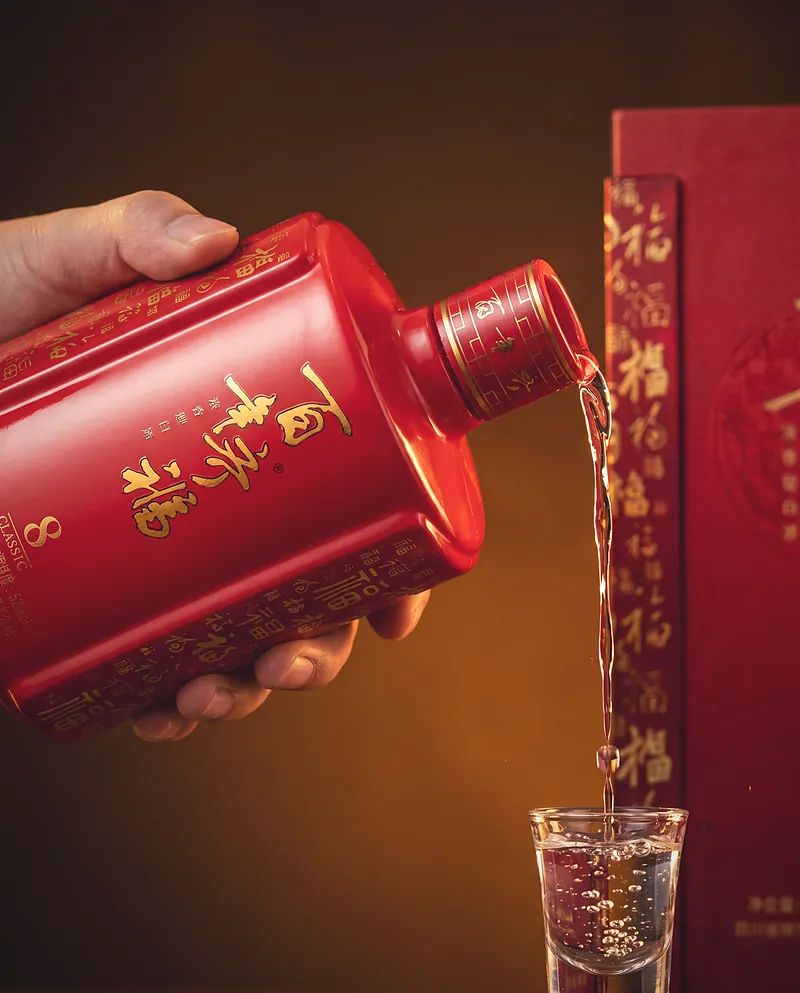
Pouring Bainian Qifu · 8 into a small cup
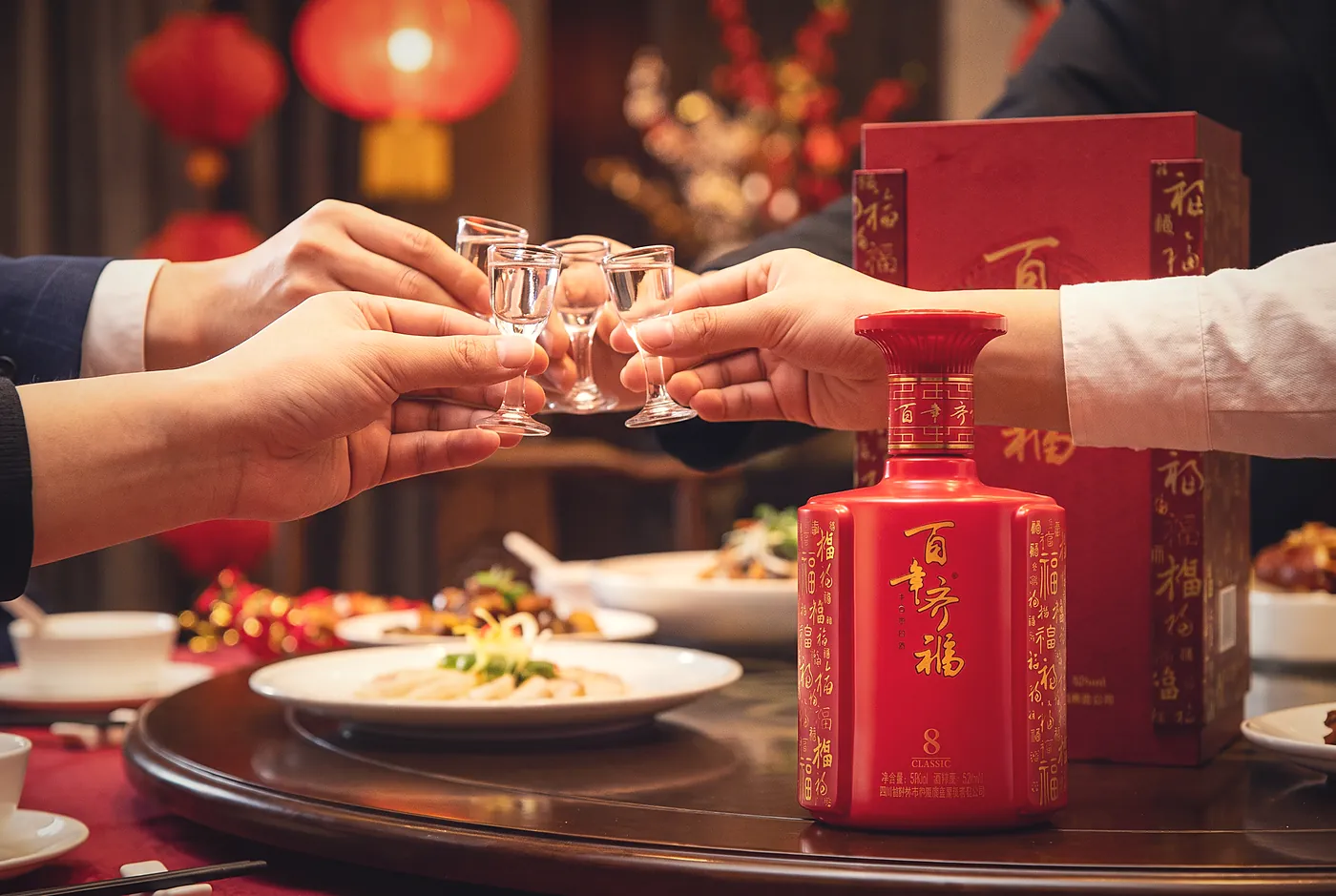
Cups raised together at a banquet
  1. Look

    Pour a small cup. It should be crystal clear; swirl and watch the tears.

  2. Nose

    Start at a distance, then closer. Strong aroma opens with pit aroma, pineapple-like fruit and grain.

  3. Sip

    Take a small sip and let it coat the tongue. Good baijiu is soft and sweet, not harsh.

  4. Linger

    Breathe out after swallowing and notice the long, clean finish. Nose the empty cup too.

Request samples and specs

Drink in moderation

Moderation is the art of tasting

Good baijiu is for savouring, not for competing. Following China’s official dietary guidelines, we advocate moderation: small cups, sipped slowly, shared with people you care about.

Chinese Nutrition Society · 2022

Dietary Guidelines for Chinese Residents (2022)

Adults who drink should consume no more than 15 g of alcohol a day. Children and adolescents, pregnant and breastfeeding women, and people with chronic illness should not drink.

15gdaily alcohol limit
36mlBainian Qifu · 8 (52% vol)
about 1.5 small cups (25 ml each)

Calculation: 15 g ÷ 0.789 g/ml (density of alcohol) ÷ 52% ≈ 36 ml. This is the guideline’s upper limit, not a recommended amount.

How we drink

  • Small cups, slowly
  • Always with food
  • Water alongside
  • No pressing, no contests
  • Never drink and drive
  • Not for minors, pregnancy, breastfeeding or chronic illness

Source: Chinese Nutrition Society, Dietary Guidelines for Chinese Residents (2022). Serving guidance only, not medical advice.

↑